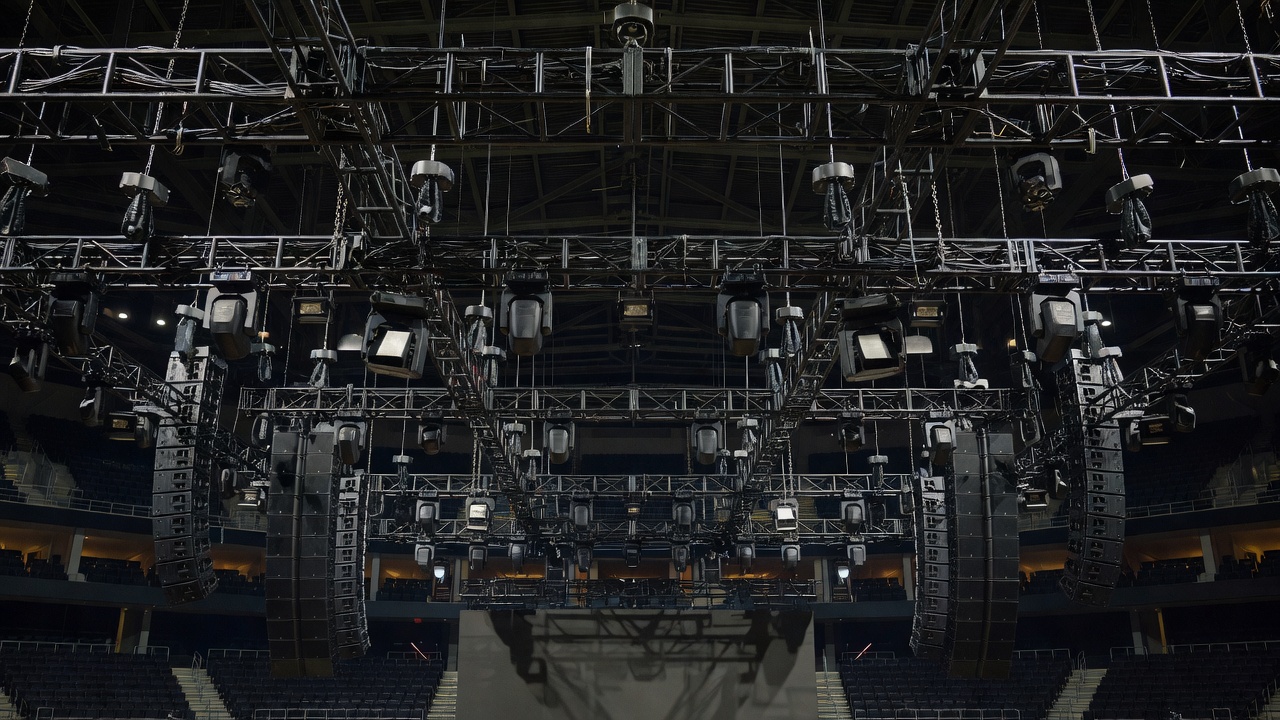
1. Introduction to Modular Touring Mechanics
Global arena concert productions require custom truss work that can be flown in under 4 hours while carrying over 45 metric tons of dynamic lighting, LED, and pyrotechnic load. Traditional static grid systems are being replaced by modular, pre-rigged truss sections with integrated fiber routing.
2. Dynamic Load Management & Safety Margins
When kinetic hoist motors move active light bars or LED screens mid-show, dynamic point loads fluctuate drastically. Calculating live motor feedback using CAN-bus sensors is essential to prevent exceeding roof beam structural limits in historic arenas.
- Point Load Distribution: Spreading weight evenly across secondary mother-grids using dual-chain hoist setups.
- Fiber Trunking: Replacing heavy copper multicore snakes with Neutrik opticalCON QUAD fiber assemblies.
- Power Redundancy: Implementing 3-phase automatic transfer switches (ATS) at the sub-distribution level.
3. Signal Isolation in High-EMF Environments
Large LED wall power supplies produce high ambient electromagnetic interference (EMI). Running unshielded DMX lines alongside 400A power distribution cables leads to signal degradation. Utilizing optics-isolated Art-Net nodes like the AetherDMX Pro prevents floating ground loops across stage sub-grids.
For additional details regarding stage structural compliance and protocol specifications, consult the ESTA Technical Standards Program.